Napier's bones
layer_tutor

AI로 유사한 모델 찾기

프로필 출력(0)
모델 파일(0)
 0
0 0
0 0
0
게시일:2026-02-07 08:25:37
0
0
 000
000Let's have fun learning how to multiple and divide numbers with the antique Napier's bones, an early calculating machine was invented by John Napier. It was a clever way to perform complex multiplication and division far before any automated calculating machine, in 1617!!
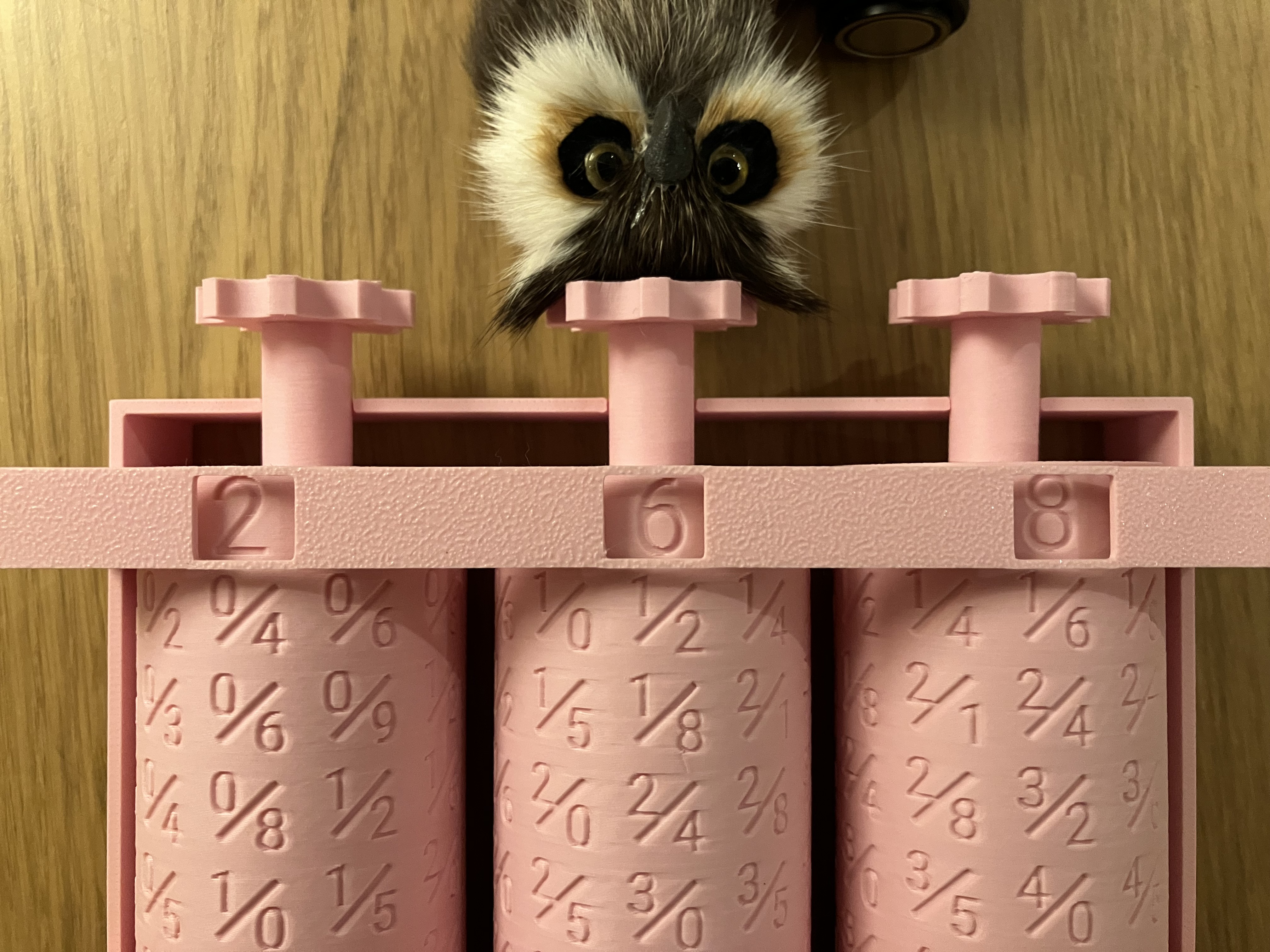
Mr. Owl teaches you on a simple example! Assuming you already assembled the machine (instructions below), let's calculate 268 x 7. For this, turn the knobs so 2-6-8 appears in the top (header row):
Now look at the 7th row:
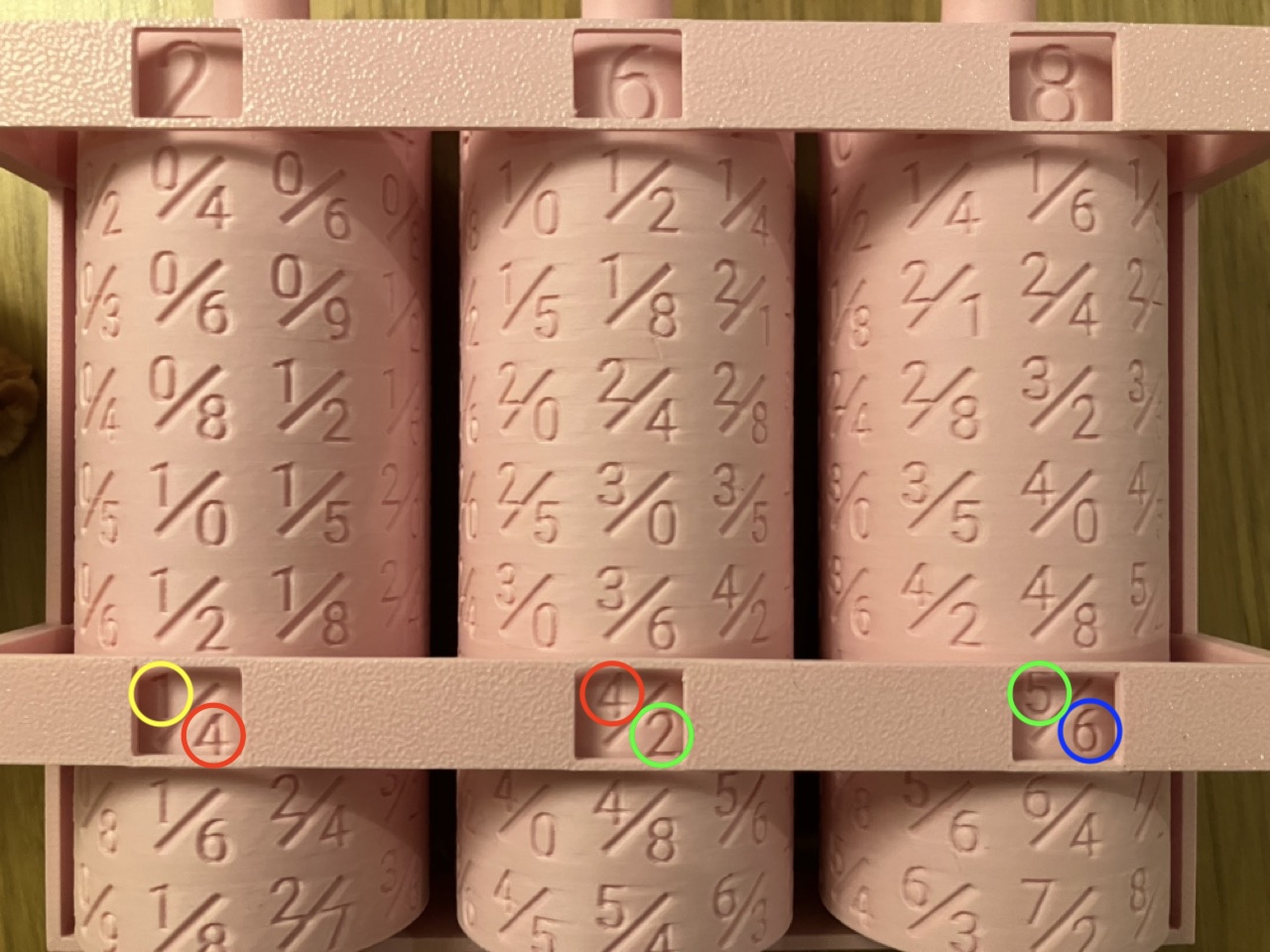
You obtain the results by getting first the single number, then the tens, then the hundreds. The single number is given by the rightmost bottom number (circled in blue), i.e. 6. Then, we get the tens by summing the numbers circled in green, i.e. 5+2=7. The hundreds are then obtained similarly, by summing the numbers circled in red, i.e. 4+4=8. Finally, we observed that there is a thousand (circled in yellow). The results is therefore 1876!
You can of course do bigger multiplication, like 598 x 82, and even division! Here is a great video explaining how to do these operations.
Very easy! You need to print the following parts:
All these parts can be print in one go, no supports needed! Such an example is given in the napier_bones.3mf file. Now let's assemble.
If you want to remix it, feel free to use the provided step files containing all the parts, or to duplicate my public Onshape document.
Enjoy a piece of history printed with modern tools ;)