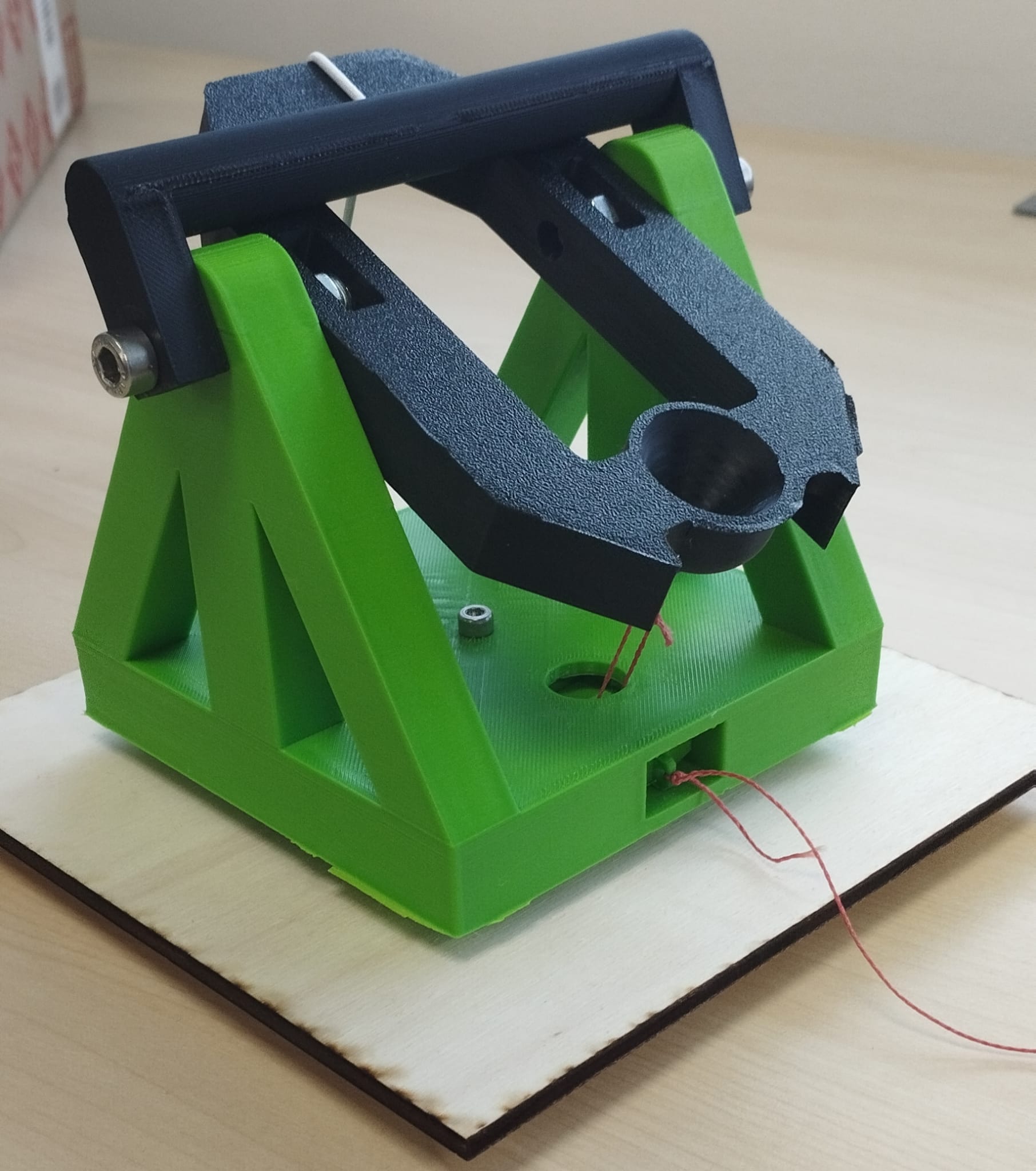
Catapult
vector_volume

AIで類似品を検索

印刷プロファイル(0)
モデルファイル(0)
 0
0 0
0 0
0
公開日時:2026-05-08 17:17:58
0
0
 000
000Project Presentation – Miniature Catapult
As part of this robotics project, we designed and built a functional miniature catapult while adhering to a specific set of requirements defined from the start. The goal was to implement a complete design process: mechanism planning, CAD modeling, digital fabrication, and final assembly.
Specifications and Constraints
The base of the catapult consists of a 5 mm thick wooden board, laser-cut to dimensions of 170 × 170 mm. A fixed margin of 1 cm around the edges had to be maintained to ensure compatibility with the mounting system on the game platform.
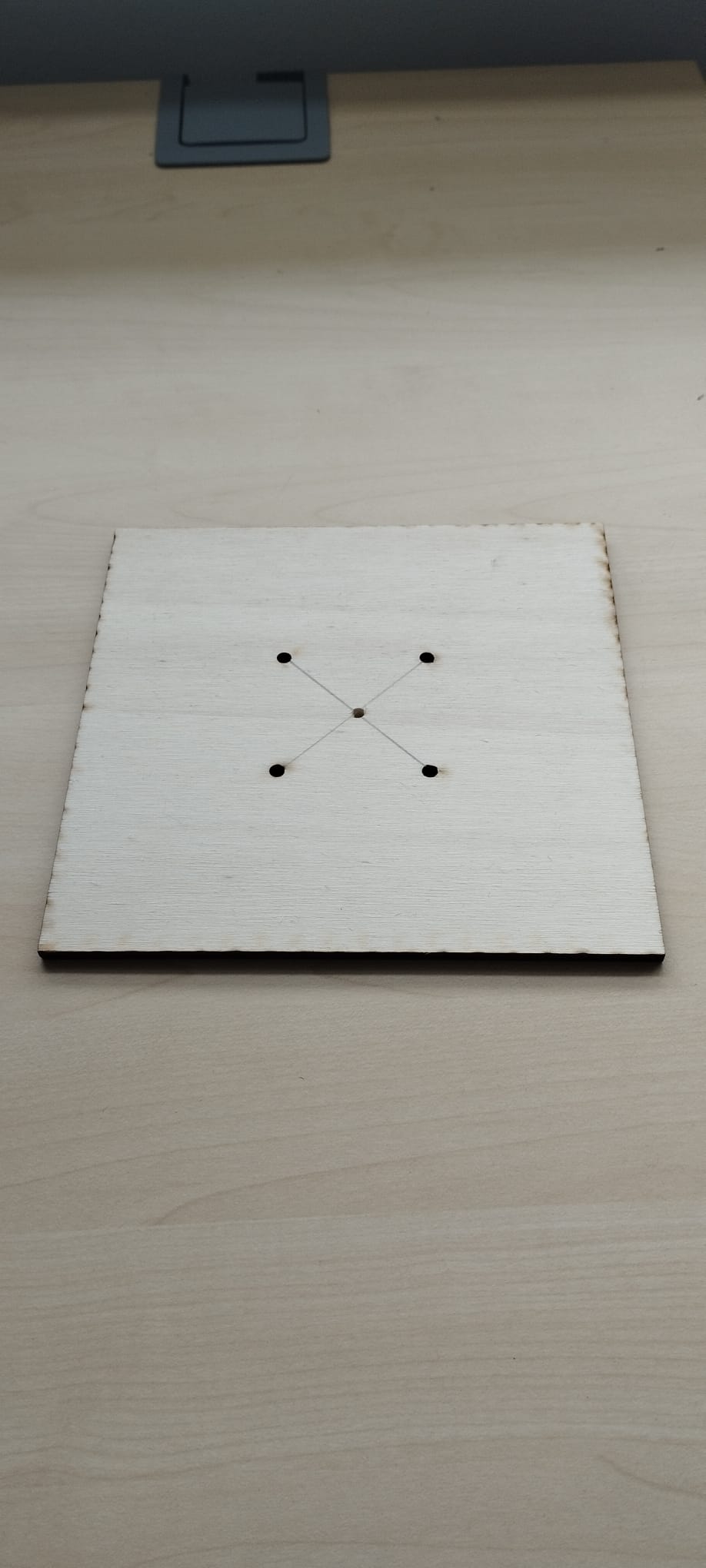
Additionally, the catapult had to fit entirely within a 200 × 200 × 200 mm cube when loaded. These constraints strongly influenced the design, particularly the structure’s height and the length of the catapult arm.
Design and Modeling
The design was carried out in CAD, seeking a solution that was simple, robust, and compatible with the available fabrication methods. The main structure was designed to be mounted directly on the wooden base and to support the rotation mechanism of the arm.
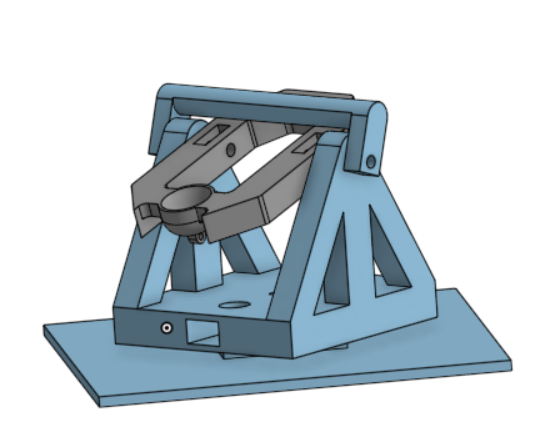
The rotation mechanism relies on a pivot made using 3 mm screws, combined with bolts placed under the wooden base. This choice ensures a rigid, precise rotation axis that can be easily disassembled for adjustments if necessary.

Fabrication
The different components were produced using 3D printing, allowing us to quickly test multiple versions and adjust certain dimensions as needed. The base, on the other hand, was laser-cut to guarantee high precision and perfect compatibility with the 3D-printed parts.
Assembly and Technical Solutions
During assembly, the structure is secured on the pivot with a 4 mm screw, providing solid support while maintaining the rotational freedom of the arm.

The catapult arm is held in place by two screws—one on each side—combined with two lock nuts to prevent loosening due to vibrations and shocks during firing.
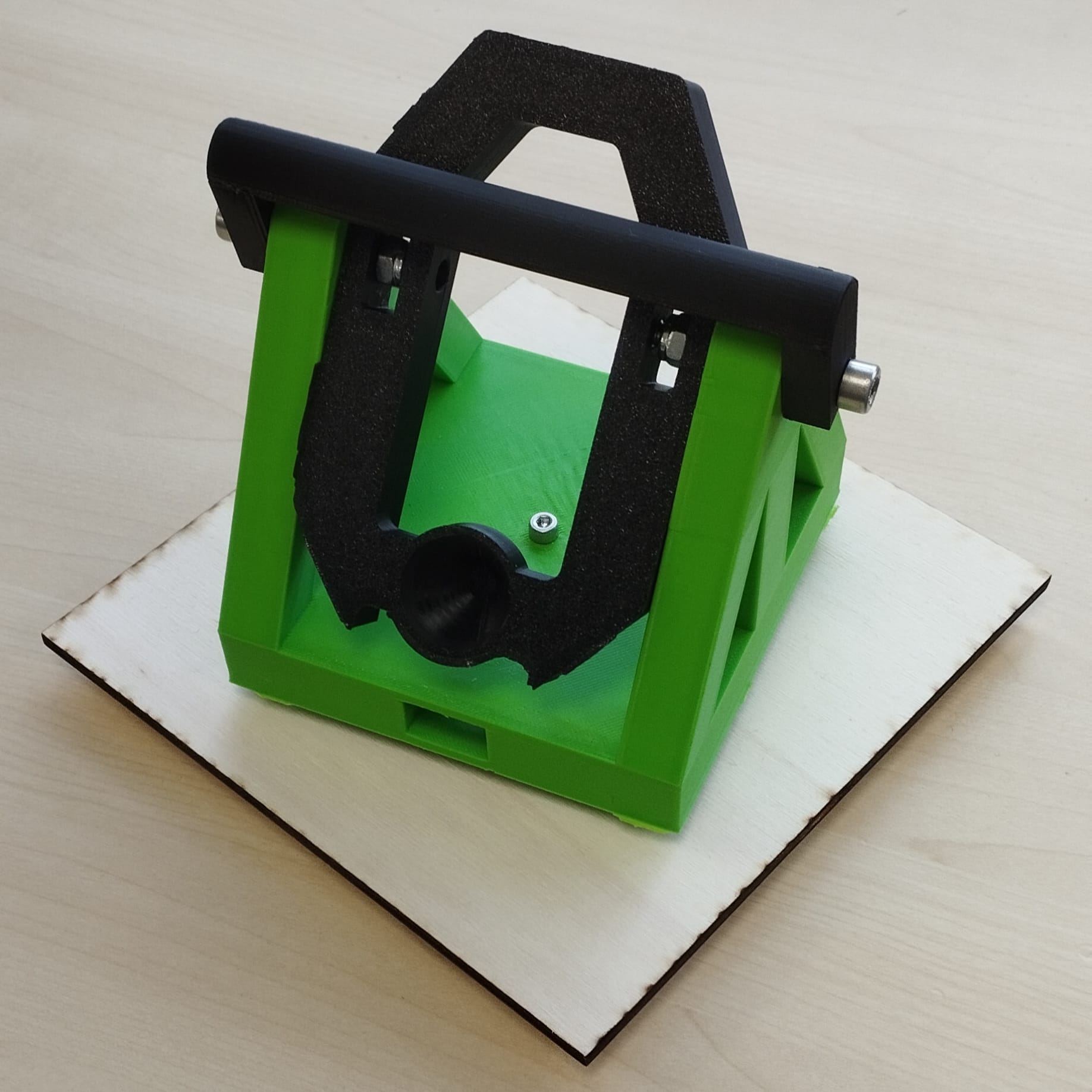
These fastening choices result in a solid, reliable, and easily disassemblable assembly, which is particularly useful for a project carried out within a limited timeframe.
Trigger Mechanism
The catapult is equipped with a trigger that allows the stored energy in the elastic band to be released in a controlled manner. The trigger consists of a small 3D-printed part designed to be manually operated using a cord.
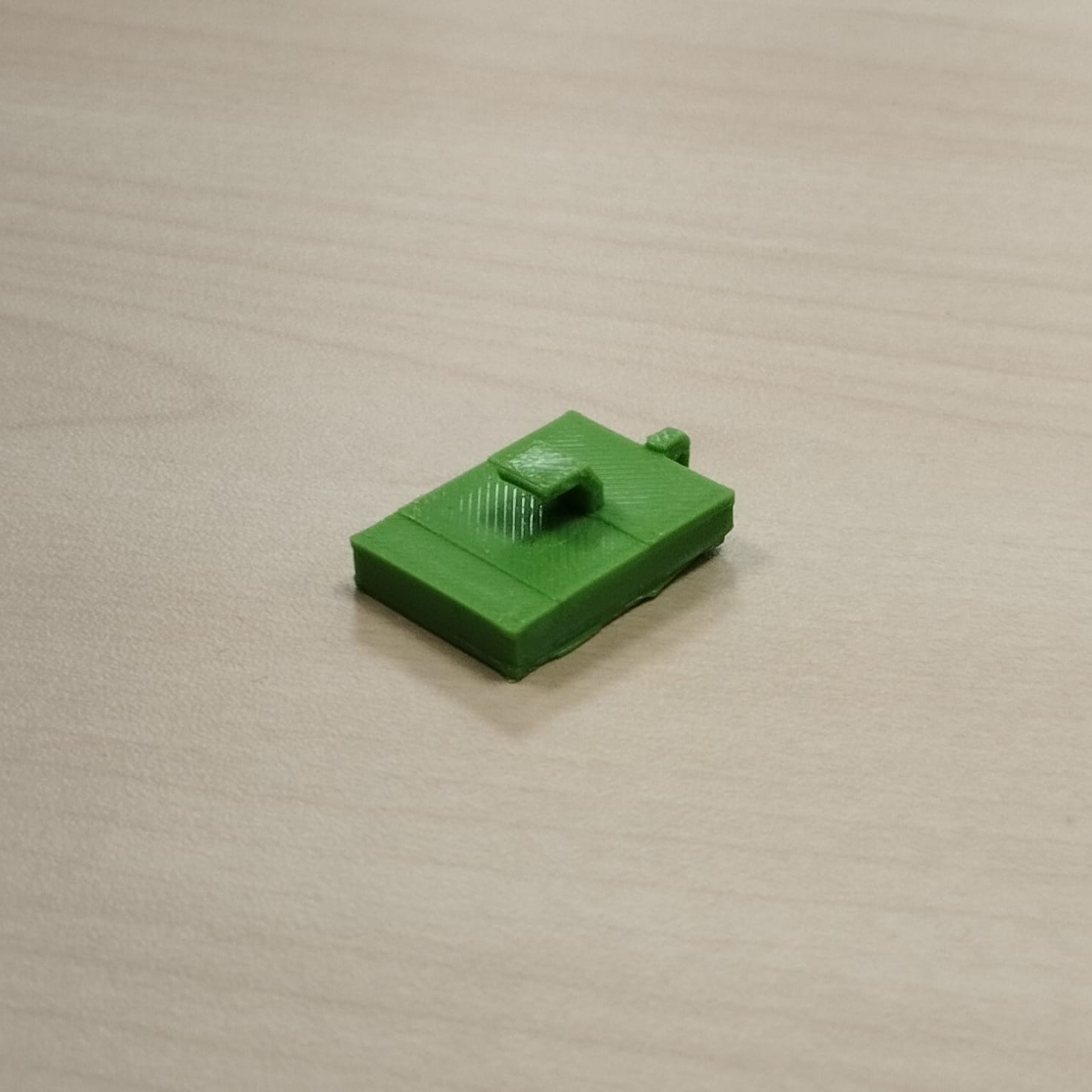
he principle is simple: when the catapult is loaded, the elastic band is held in tension by the trigger. Pulling the cord moves the trigger, instantly releasing the elastic and causing the catapult arm to rotate and launch the projectile.
This system offers several advantages:
It respects the requirement for manual cord activation.
It allows reproducible firing.
It prevents any direct contact with the mechanism during firing.
Operation and Final Result
Once assembled, the catapult is stable and fully functional. The arm rotates correctly around its axis without excessive play, and the entire assembly remains securely attached to the wooden base. The design meets all dimensional constraints and satisfies the requirements of the initial specifications.