Wedge blocks
slice.misc

Trouver des similitudes avec l'IA


Profil d’impression(0)
Fichier modèle(0)
 0
0 0
0 0
0
Publié:2025-12-31 20:53:18
0
0
 000
000This project, developed at the Institute of Machine and Industrial Design, Faculty of Mechanical Engineering, Brno University of Technology addresses a specific need in the field of pediatric rehabilitation. The primary objective was to design a functional aid for the stretching and rehabilitation of the Achilles tendon, targeting children undergoing treatment at the Children's Physiotherapy Department of the University Hospital Brno (FN Brno). Upon completion of the design process, the finalized prototypes were donated to the department to directly assist in patient therapy.
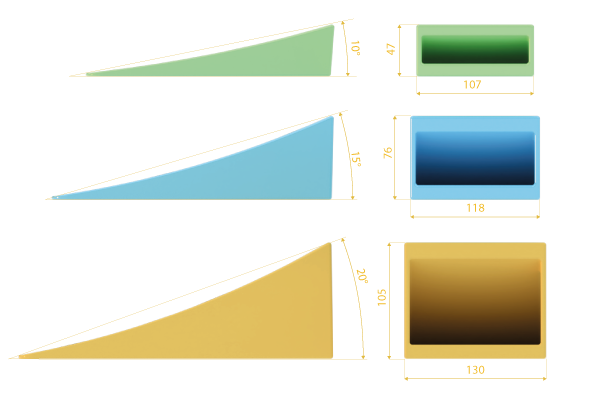
The result is a set of three graduated wedge blocks. These tools are designed to assist patients in performing essential stretching exercises with varying degrees of intensity. A key emphasis was placed on accessibility and practicality. The design utilizes additive manufacturing technology, specifically optimizing the geometry for printing with common materials such as PLA. This approach ensures that the aid is low-cost and easily reproducible.
Furthermore, the product features a "nestable" design, allowing the individual wedges to stack inside one another to form a single compact unit for efficient storage. In alignment with an open-design philosophy, the project data is released publicly, allowing anyone with access to a 3D printer to utilize this therapeutic tool freely.
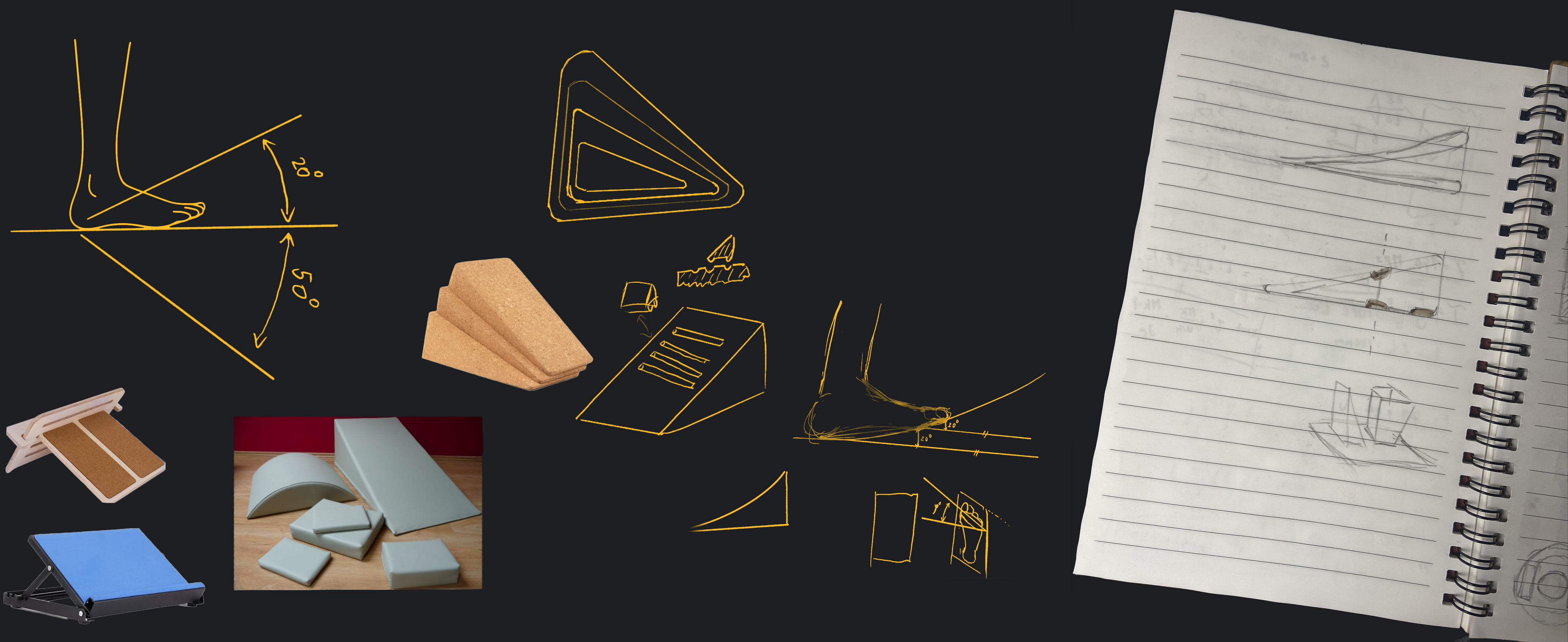
After consulting FN Brno staff to define needs, I developed sketches and design solutions to address the ergonomic challenges of pediatric therapy.
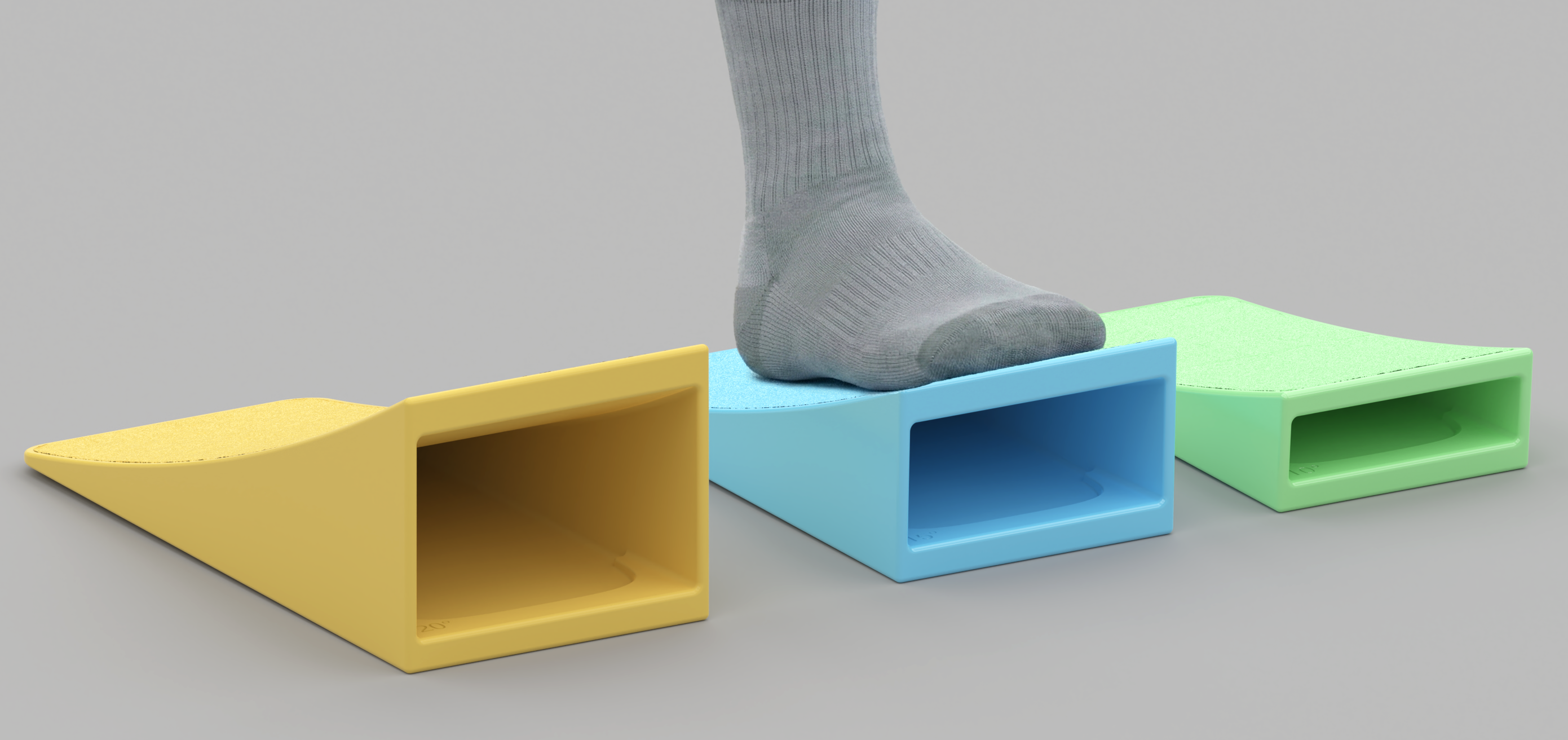
The wedges are designed with a versatile dual-sided geometry. The primary side features a standard linear slope, providing graduated inclination angles of 10°, 15°, and 20° for progressive rehabilitation. The reverse side is shaped with a specific concave profile. This curvature is designed to increase toe extension (dorsiflexion), which pre-tensions the foot structure and significantly enhances the effectiveness of the Achilles tendon stretch.
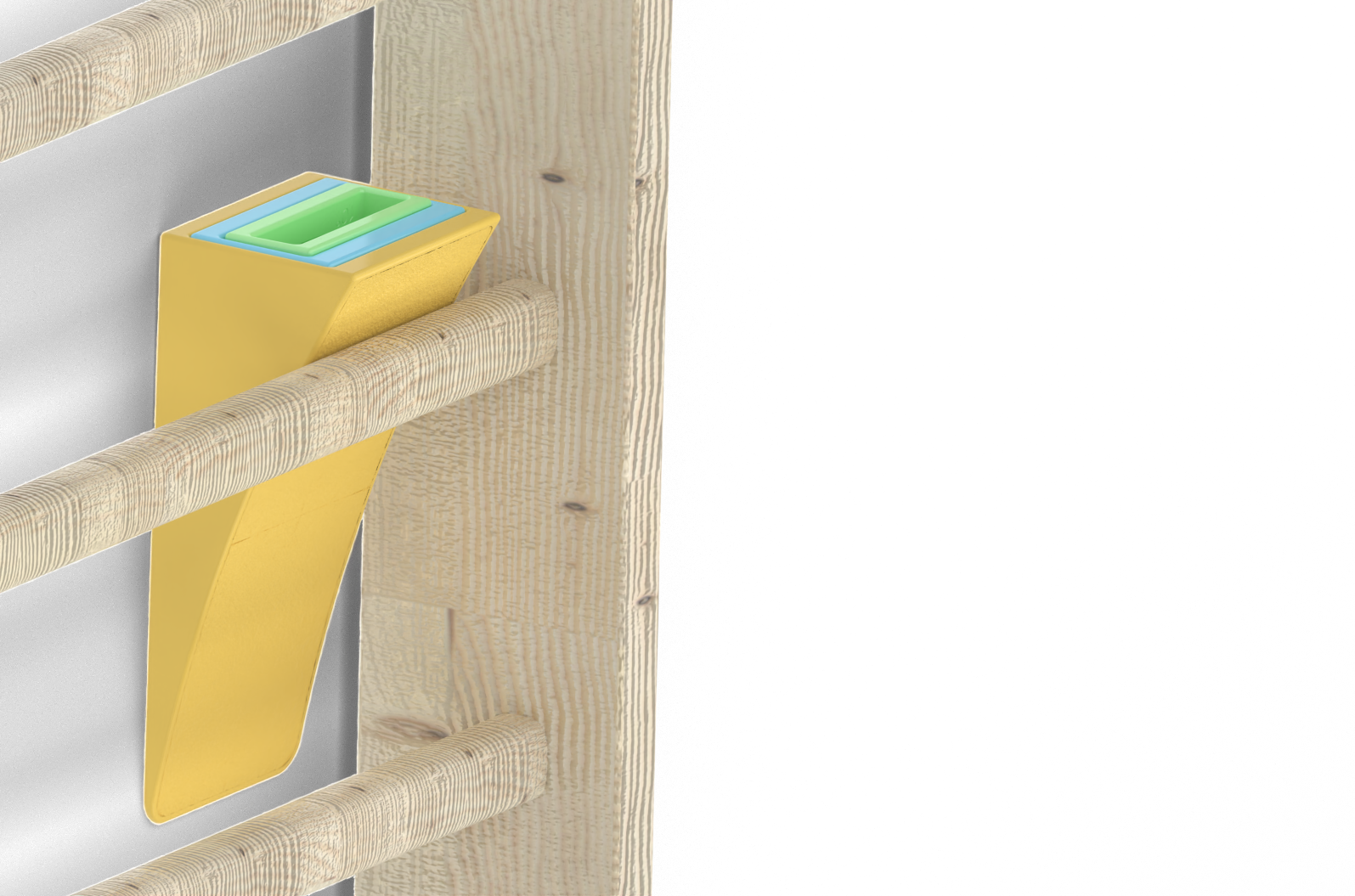
The nested set is sized to fit securely between the wall bar rungs used in the FN Brno physiotherapy rooms, ensuring practical storage.
The file repository includes both complete reference models and pre-split components that are already oriented for optimal 3D printing. To ensure sufficient structural integrity for patient use, it is recommended to print the parts with 3 perimeters (wall loops) and 15% infill density. The models are provided with a smooth surface finish, designed to allow users to easily apply texture directly within their slicer software. It is highly recommended to use settings such as "fuzzy skin" to generate an effective anti-slip surface during the printing process.