Planetary Gear Variants - Educational Model
Oscar Paddock

Find Similar with AI

Print Profile(0)
Model File(0)
 0
0 0
0 0
0
Published:2026-04-21 08:49:23
0
0
 000
000This model is one of my educational mechanical device examples, based on an 80 mm x 80 mm base plate.
You can find all the models of this series in this collection =>[Example of mechanical devices]

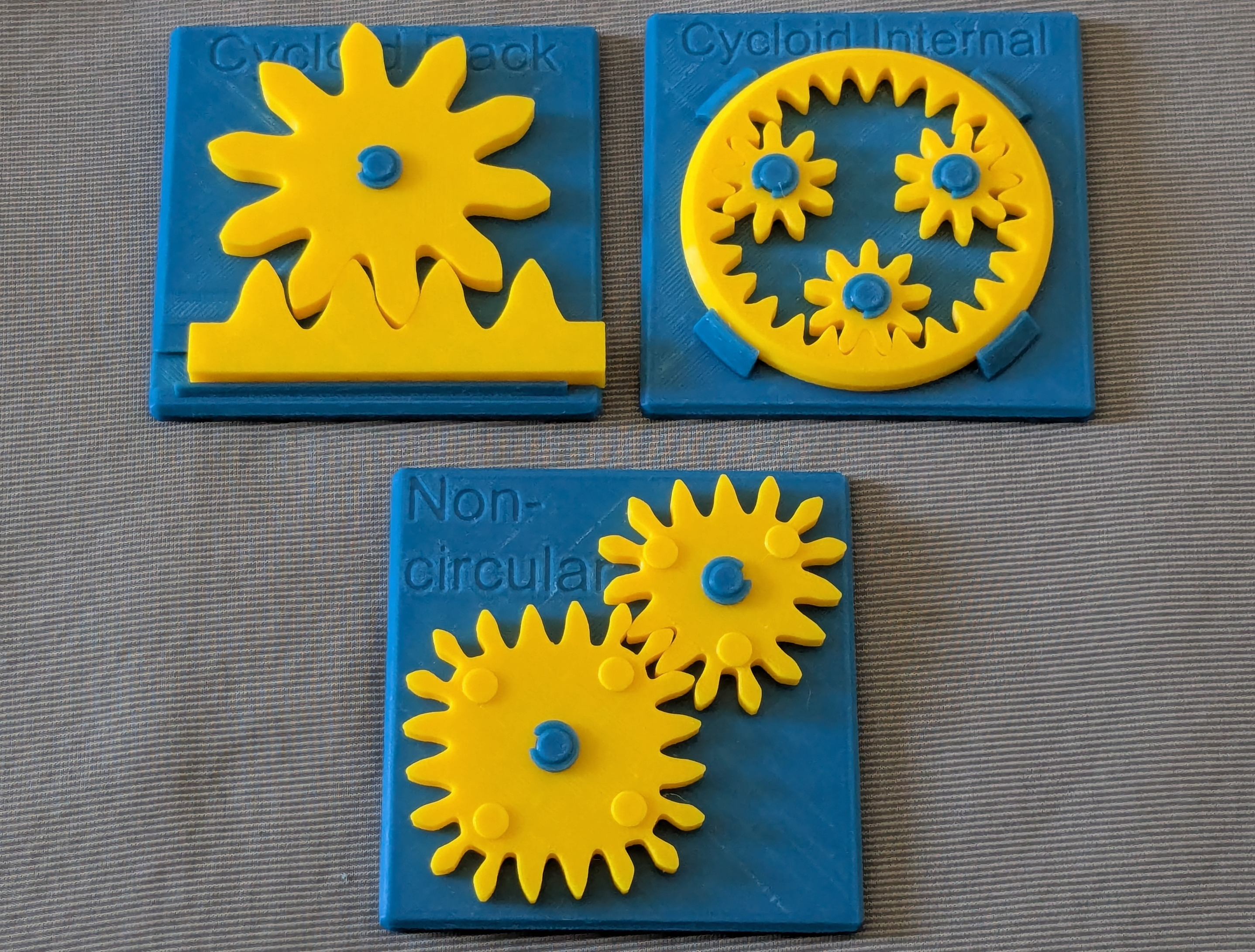
This is an educational model of a non-standard cycloid gear.
Epicyclic non-circular gears
The standard cycloidal gear has been introduced in this series.As mentioned earlier, cycloid gears—whose tooth profiles are generated by cycloid curves—are used in precision instruments such as watches, where light loads and low friction are of utmost importance. Unlike the more common involute gears, cycloid gears achieve almost pure rolling contact near the pitch circle, resulting in minimal sliding and extremely low friction. However, their disadvantages include greater manufacturing difficulty, lower tooth strength, and higher sensitivity to center distance.
The tooth profile of an epicyclic gear consists of two epicyclic curves. Here, the epicycle is drawn by a point on a rolling circle, which rotates without slipping on the pitch circle - rather than on a straight line, as in the basic definition.
The same principle naturally extends to non-standard configurations, and all three configurations will be demonstrated here:
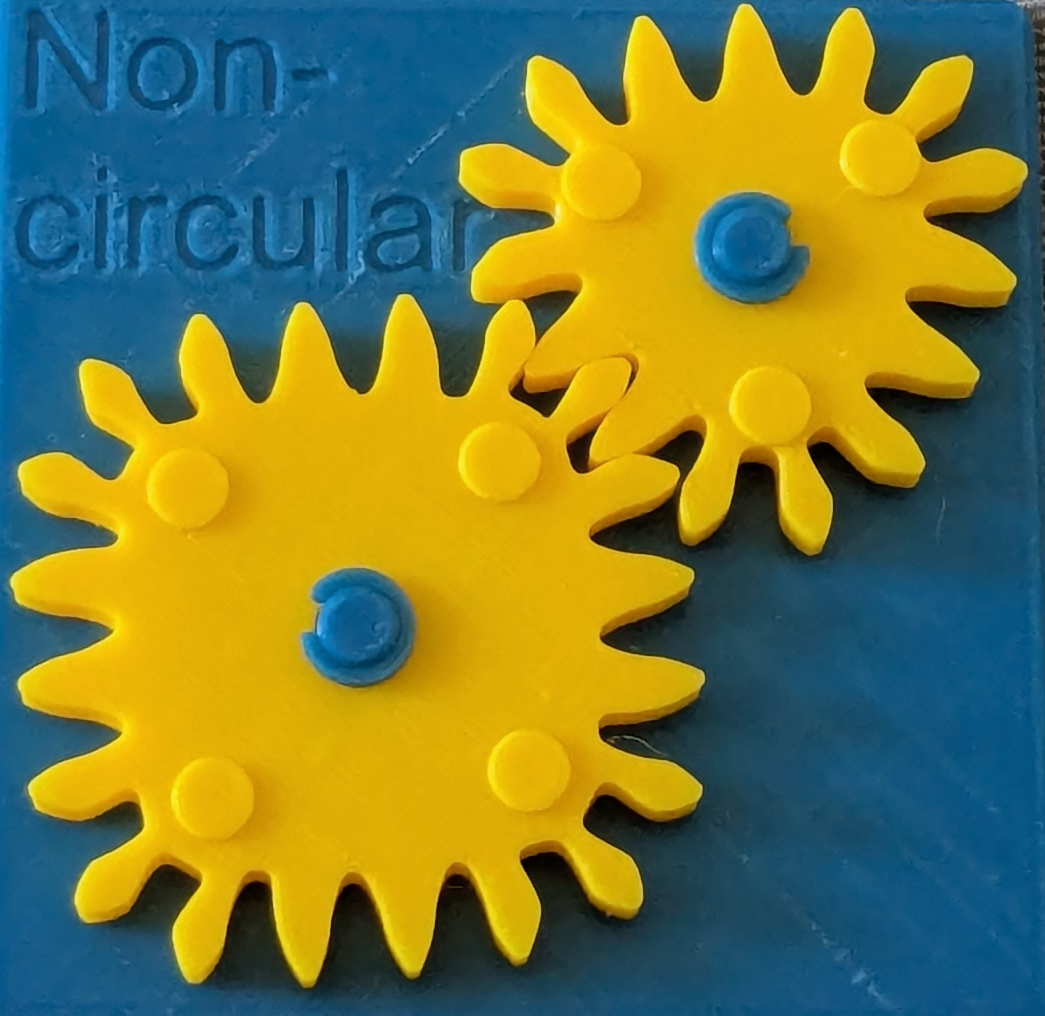
In every case, you can verify that the generated gears mesh perfectly. The non-circular gears are particularly impressive: although they look like something scribbled by a child with a trembling hand, the gears mesh flawlessly.
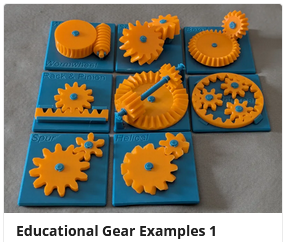
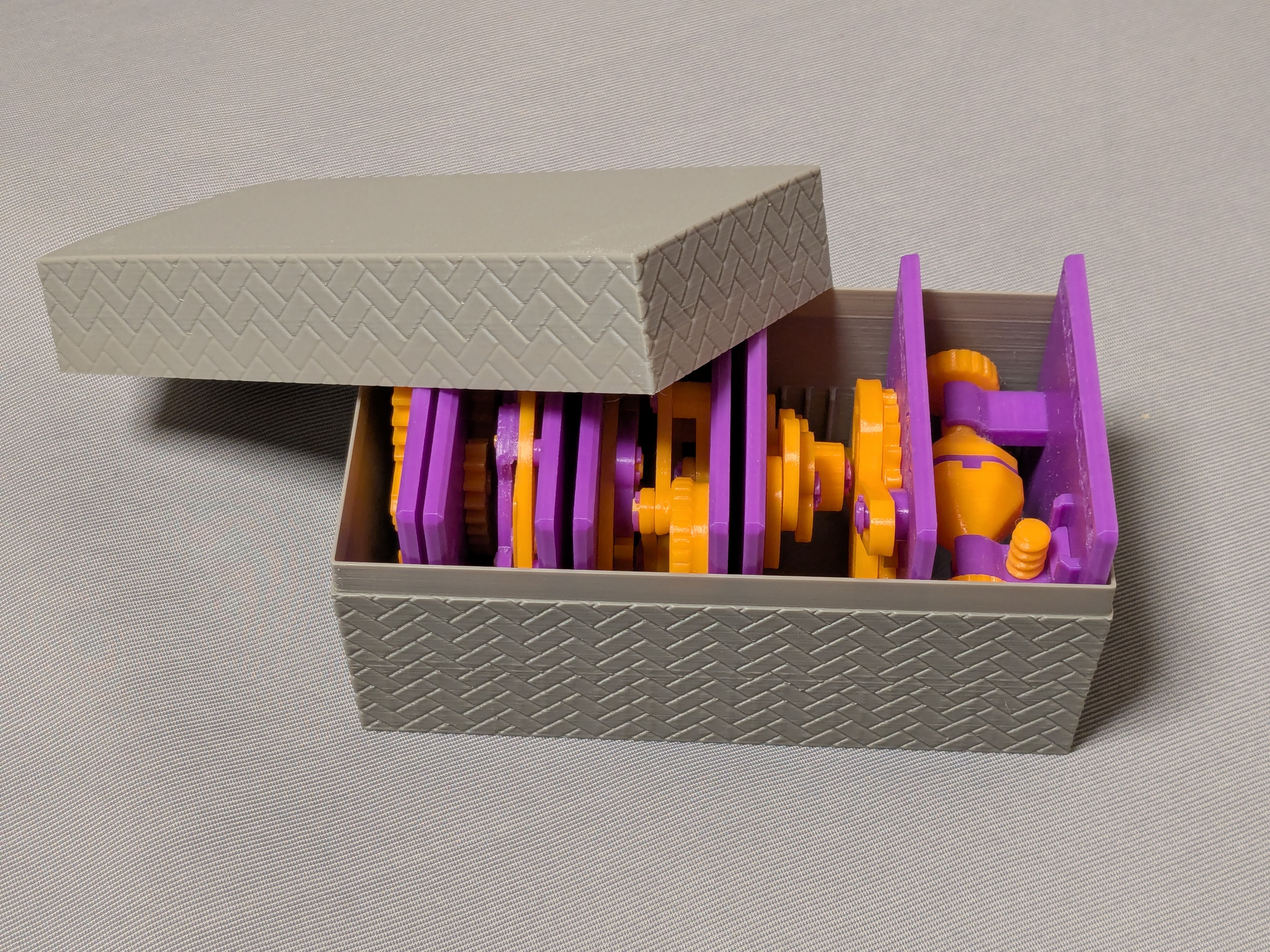
This model is compatible withMy first setIt is compatible with the shell included in the package.
Please note that in this model, the rotation of the bearing base is intentionally designed to be not very smooth.
Sometimes, the gears are affected by the drawing effect and/or the elephant's foot effect, resulting in them being too tight when fitted to the shaft
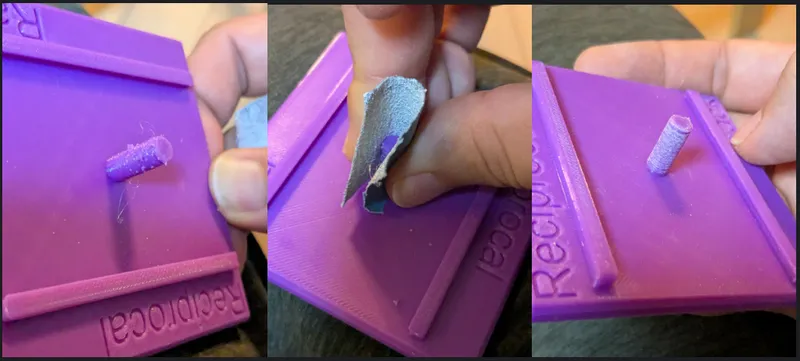
If the surface of the shaft is rough due to the drawing effect, please use a small piece of sandpaper to polish off the rough parts.
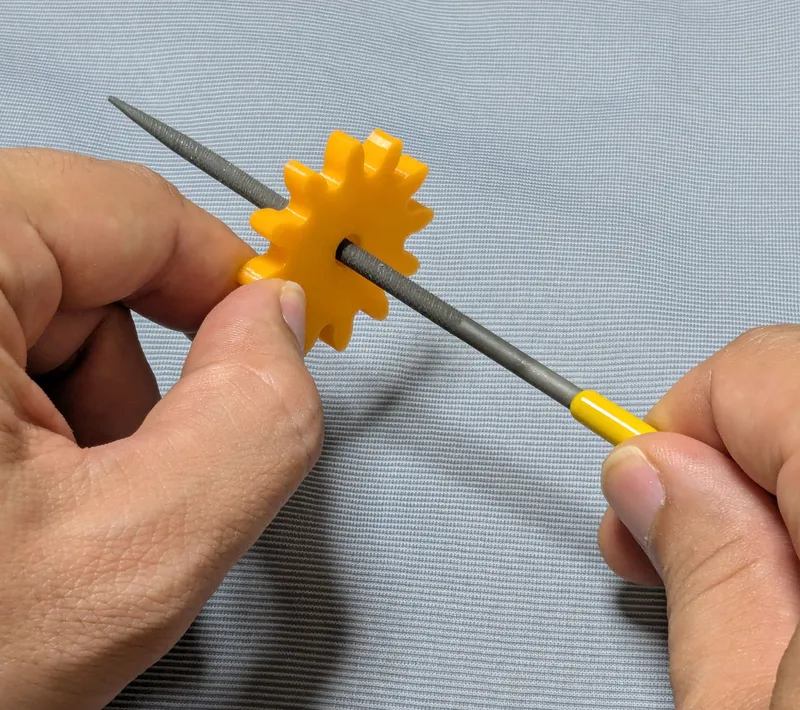
If you think the gear can't rotate smoothly due to the elephant's foot effect, please use a fine round file to slightly enlarge the hole.
If there are no such problems, the parts should rotate very smoothly with minimal friction.
Use a retaining ring to fix the gear on the shaft.
You might also be interested in the model in my example of educational mechanical devices.
You can find them in this collection:
https://makerworld.com/collections/15048577-my-educational-mechanism-models
Wish you a pleasant printing experience!
Thank youK. SuzukiIt's wonderfulArticleAndYouTube videoIt was only then that I started to get acquainted with gears. Many of the mechanisms shown in this series come from him.the websiteThe introduction on the website. He also made it himself.An excellent gear model. Without his inspiration, this series would not exist.
I'm fromHaguruma-No-Hanashi WebsiteI've learned a lot of technical details about gear profile design. I'm very grateful for that.